SALTLINE WIKI / INFORMATION
How Saltline was made with Claude Fable 5.2
Saltline is the playable result of Felix Rieseberg’s Claude Fable 5.2 experiment. The useful distinction is between the first generated build, the revised artifact players open today, and the creator’s account of how it was built. Here is the background, tied to his own posts and video.
Saltline, Claude and Fable 5.2
Saltline names the browser FPS. Claude is Anthropic’s AI family; Fable 5.2 is the model named by the creator. Anthropic’s 9 November announcement independently establishes the model’s identity. A Saltline guide can explain that relationship without becoming a model benchmark or claiming the game is an official Anthropic product.
Anthropic · Claude Fable 5.2 announcement ↗The initial prompt and reported run
Felix’s launch post describes one-shot prompts without human feedback. The making-of shows a request for a visually detailed FPS with a small scope, rather than a large campaign. He reported about eight hours and approximately $550 at API pricing for the initial run. Those are creator-reported production figures, not an independently audited bill or the price to play Saltline.
Making Saltline with Claude Fable 5.2
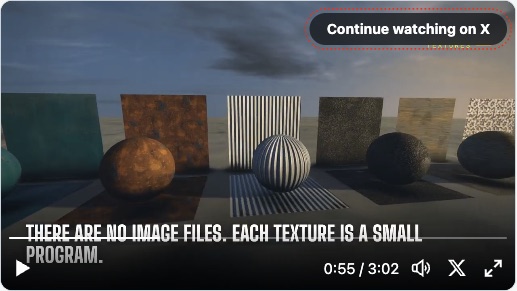
A 3:02 making-of from Felix Rieseberg. Look for procedural materials at 00:55, wet-ground interaction at 01:35 and synthesized sound at 02:20.
00:55 · Materials generated by functions
The video’s material sampler shows paint, rust, corrugation and other surfaces. Felix explains that the textures are generated by code rather than loaded as image files. Procedural shading computes a surface’s appearance from functions; the visible sampler helps make that claim concrete. This does not mean every visual effect is free or that every device renders it at the same speed.
01:35 · Wet ground and footsteps
The making-of connects the visible water on the ground with footstep behavior using the same map. In our own playtest the wet lanes and reflected port lighting were immediately visible. We did not audit every shader or independently measure how each sound cue is selected, so the implementation explanation remains attributed to the creator’s video.
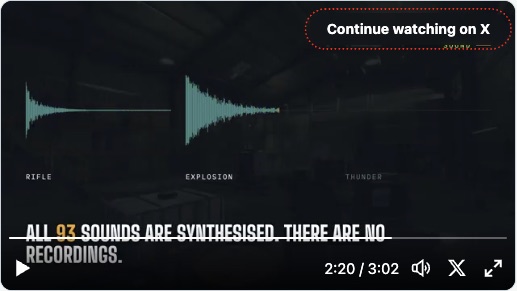
02:20 · Sound synthesis
The audio segment shows rifle, explosion and thunder waveforms and explains that the sound effects are synthesized. That is different from claiming the game shipped with a recorded commercial sound library. The creator’s demonstration is the source for this account; our short local gameplay capture intentionally has no recorded audio.
The current play link is a revision
The title-screen note says Felix spent about two additional hours improving weapon models, sound and gameplay after the first version. It separately links the initial one-shot artifact. Our controls, screenshots and two-relay playtest refer to the revised main link, so they should not be used as evidence that those same details were already present in the untouched first build.
What this means when you play
You open a browser artifact, not a Steam download or a remote cloud-game stream. Expect a compact mission with a specific objective, not a full commercial AAA campaign. Check the current in-game Controls, distinguish game bugs from host/browser input problems, and use real gameplay evidence when judging how it feels. The AI origin is interesting context; it does not replace testing the game.
Sources & creator credit
Gameplay facts here refer to the revised artifact linked above. Creator statements and player reports are identified separately.